
By Anne Fonda with expert review by Mark Woodruff, Senior Product Manager, Air Conditioners
Explore HVAC Basics
HVAC Basics: How do air conditioner & air handler matched systems work?
In certain parts of the country, a central air conditioner paired with an air handler is an economical approach to cool and heat your home. For this to be cost-effective, you need very mild winters.
“This split system uses the refrigeration cycle to cool your home, while electric heat strips inside the air handler heat your home when needed. This system works best in climates that mostly need cooling, and very seldom need heating (South Florida, for example).”
- Mark Woodruff, Senior Product Manager, Air Conditioners
What does an air conditioner do?
An air conditioner works to remove heat and humidity from your home. When your thermostat senses that the temperature inside is above your set point, it signals your central AC system to start running.
Your air conditioning system consists of multiple components – some inside and some outside. These components work together in the refrigeration cycle and include:
The compressor pumps refrigerant in a closed circuit. The cold evaporator coil absorbs heat from inside your home and sends the heated refrigerant to the outdoor coil, where the heat is released into the outdoor air.
An air conditioner’s cooling efficiency is measured by its Seasonal Energy Efficiency Ratio (SEER2). The higher the rating, the more efficient the unit is at cooling your home.
American Standard AC units have SEER2 ratings from up to 13.4 to up to 24. A unit’s exact SEER2 may depend on the indoor unit it’s paired with. Units also range from base-level single-stage units to premium variable-speed air conditioners,
“The number of speeds or stages typically translates to energy efficiency and better comfort… so the more variability or number of stages, the more efficient the equipment will operate and the better temperature and humidity control the system can deliver to your home.”
- Mark Woodruff, Senior Product Manager, Air Conditioners
Anne Fonda, Content Writer
A Content Writer with Trane Technologies, Anne Fonda researches topics and writes for Trane® and associated residential HVAC brands. She works in collaboration with Trane Technologies subject matter experts, offering easy-to-understand, informative content on complex topics. Her goal is to help consumers make informed decisions on the products and services they need.
She has written for HVAC and other service provider websites for over 16 years. Before transitioning to web content writing, Anne had a 14-year stint as an award-winning journalist. She graduated cum laude from the University of Missouri-Columbia School of Journalism.
When she’s not working, Anne enjoys playing word games, reading, gardening, spending time with family, and visiting gardens and museums.
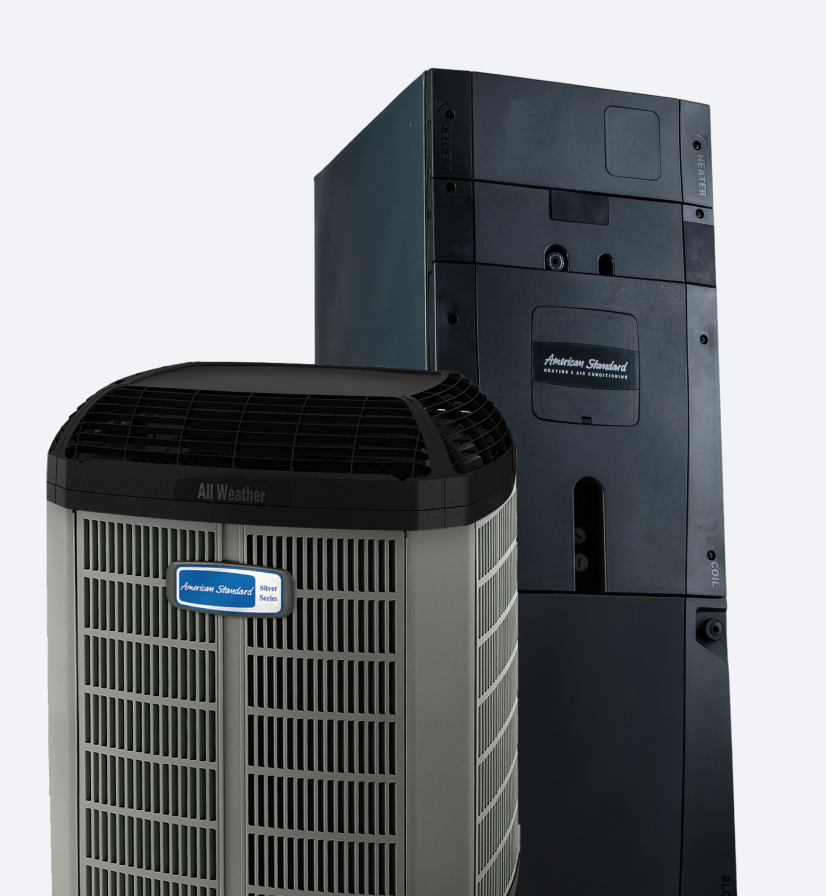
WHAT DOES AN AIR HANDLER DO?
Air handlers circulate conditioned air throughout your home
An air handler is the indoor unit that circulates conditioned air throughout your home. It has a fan and blower motor that blows air over the cold evaporator coil during air conditioning, and blows air over the hot electric heat strips when you call for heating.
The cabinet may also house a filter rack and UV lights to prevent mold in humid climates. American Standard air handlers are available with multi-speed or variable-speed motors. Variable-speed models are known for soft starts, variable airflow capacity, and enhanced humidity control with the Comfort-R™ airflow system.
BREATHE EASIER!
Enhance comfort and breathe easier with an indoor air quality monitor
The Environmental Protection Agency (EPA) reports that indoor air can be 2-5 times more polluted than outdoor air. Common indoor pollutants can make allergy and asthma symptoms worse. High or low humidity can reduce air quality and comfort. Poor ventilation can allow volatile organic compounds (VOCs) to build up and cause health problems.
But you can take steps to protect your family’s health and your home. We now offer the Awair Element indoor air quality monitor. It shows you what is going on with your indoor air quality, and it integrates with your HVAC system. That means it can trigger a humidifier or dehumidifier to come on, trigger a whole-house cleaner to remove pollutants, or trigger a whole-house ventilation system to clear the air.