Published: August 14, 2025
What Is an Energy Recovery Ventilator, and Do I Need One?
Discover what an energy recovery ventilator (ERV) does and how it can help bring fresh air into your home and help save on energy costs. Count on American Standard®.

Summary
Learn everything you need to know about energy recovery ventilators (ERVs) and whether an energy recovery ventilation system is right for your home.
Ventilation is what the V means in HVAC. Your heating and air conditioning units get most of the attention, while ventilation can be an afterthought, except in new, tightly sealed homes.
An ERV, or energy recovery ventilator, is a type of whole-house ventilation system. New homes are built to tighter envelopes, driving the need for another source of ventilation since the home may not “breathe” as well as an older home. An ERV is suitable for new homes where it’s needed to meet ASHRAE standards for mechanical ventilation and indoor air quality (IAQ), as well as existing homes with ventilation issues.
How does an energy recovery ventilator work?
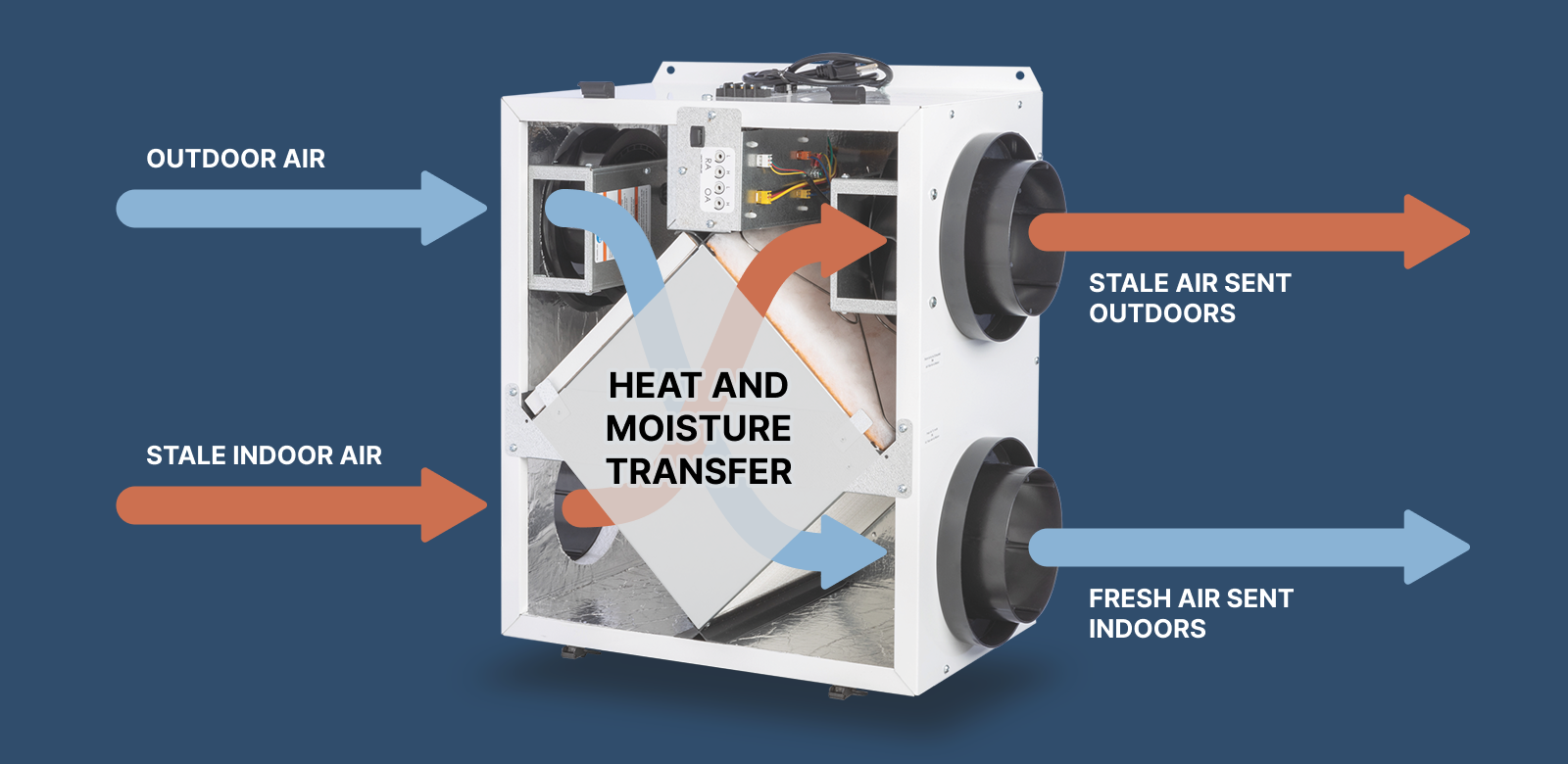
An energy recovery ventilator is a mechanical ventilation system. It uses two motorized impeller fans and two air streams to pull fresh outside air in and expel stale outdoor air to the outside. The air passes through a crossflow energy transfer core.
Heat recovery
Using a heat exchanger, the ERV recovers residual heat left in the furnace exhaust or air handler exhaust in the winter to warm the outside air before sending it into the HVAC system.
In summer, it cools down the incoming fresh air before sending it through your HVAC system. This heat energy recovery can help reduce the energy your HVAC system uses to heat or cool your home. That can mean energy savings and cost savings.
Humidity control
In addition to heat recovery, ERVs provide enhanced comfort by helping to control indoor humidity. Low humidity in the winter can make your house feel colder, while high humidity in the summer can make your home feel warm and sticky. The ERV helps solve both problems.
In the winter, the unit recovers both heat and moisture from the outgoing air during cold weather, making your home feel warmer. During hot, humid weather, it pre-cools and dehumidifies incoming air, making your home feel cooler without touching the thermostat.
Signs you need to improve ventilation
There are several signs that you need to improve the ventilation in your home, either with spot ventilation or with a whole-house ventilation system.
- Stale air feeling
- Lingering cooking and pet odors
- Condensation on the inside of windows
- Mold growth
- Respiratory symptoms
Using a bathroom exhaust fan and a kitchen exhaust fan can help, as can opening windows. But if your whole house is affected, you should consider a whole-house solution.
Benefits of an energy recovery ventilator system
- Runs continuously to replace stale indoor air with fresh outdoor air
- Reduces odors and chemical vapors
- Can help save energy by reducing the load on your HVAC system, warming cold winter air, and cooling hot outdoor air before it enters your home
- Helps control humidity
Do you need an energy recovery ventilation system?
If you have any of the problems noted above, it’s worth exploring a residential energy recovery ventilator. If you just bought a new home, an ERV may already be installed.
These whole-home ventilation systems can improve your indoor air quality for not a lot of money. Some considerations:
Energy recovery ventilator cost. A residential ERV can cost approximately $1,500-$3,500 installed. Your cost will vary based on the size of your home and ERV capacity, local labor costs, the brand you choose, and more. When you consider that an ERV will typically last 15-20 years, the long-term fresh air and energy savings make it a worthwhile HVAC system upgrade.
Energy recovery ventilator installation. The ERV should be installed by your preferred HVAC company. They can be integrated with existing ductwork or installed as part of an independent, ducted IAQ system in new construction. Units are typically installed in an attic, basement, or attached garage.
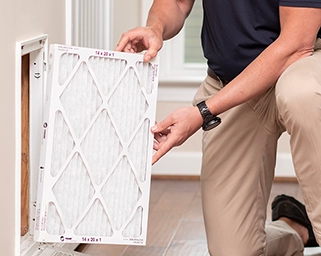
ERV maintenance. To keep your ERV running at peak performance, you’ll need to make sure it’s properly maintained. You’ll need to clean or change the energy recovery ventilator filter once every 3-4 months. Your HVAC company can also check on the ERV during routine HVAC maintenance in the spring or fall.
American Standard’s premium energy recovery ventilator unit
Our premium energy recovery ventilators are among the best in the industry. Features include:
- Three newly compact sizes to work with homes up to 4,500 sq. ft.
- Continuous, quiet operation
- Easy-access, cleanable filter (MERV 8 or MERV 13, depending on the model)
- Adjusted Sensible Recovery Efficiency up to 88%
- Durable, powder-painted finish
- High-efficiency variable speed EC motor with permanently lubricated bearings for low maintenance and longer life
- Dual-flow adjustments for simple air flow balancing
- Base limited warranty period: 5 years
- Registered limited warranty period: 10 years
Work with the indoor air quality experts
At American Standard, we have a full suite of indoor air quality solutions to help with humidity control, ventilation, and air purification. These whole-house solutions help ensure that every room in your home gets equal attention.
Expert review by Sean Goddard, Product Manager, Coils & Indoor Air Quality