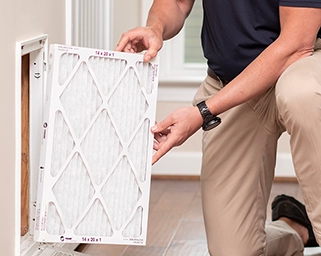
Published: July 08, 2025
10 Easy Ways to Improve Your Home’s Indoor Air Quality
Learn how to improve your home’s indoor air quality to protect your family’s health and protect your home. Count on American Standard® for reliable solutions.
Summary
Discover how improving your home’s indoor air quality (IAQ) can help you breathe easier, sleep better, and protect your health and home.
The average American spends 90% of their time indoors, and most of that time is spent at home. So, it makes sense that you want to make sure the air you and your family are breathing is as free of contaminants as possible.
This is especially important if anyone in your family suffers from allergies, asthma, or another respiratory illness. But even if that doesn’t sound like your situation, improving your home’s IAQ can help you breathe better, sleep better, and prolong the life of your HVAC system.
Keep reading to learn about some of the things you can do to improve your indoor air quality at home.
1. Don’t allow smoking or vaping indoors
If you or someone in your home smokes or vapes, do it outside. Cigarette smoke, marijuana smoke, and e-cigarettes (vape devices) can release harmful substances into the air inside your home. They can also leave a lasting smell in the air, on curtains, rugs, and upholstered furniture.
While the health risks of second-hand smoke from cigarettes and marijuana are well-known, not everyone knows the effects of e-cigarettes.
2. Reduce the use of products that emit volatile organic compounds (VOCs)
Like keeping smokers outside, you can reduce indoor air pollution and improve your air quality by reducing or eliminating products that emit volatile organic compounds (VOCs). Many common household products contain potentially harmful VOCs, including:
- Formaldehyde
- Benzene
- Acetone
Look for cleaning products, paint, adhesives, and other items labeled “No VOCs,” or “green,” or “non-toxic.”
In addition to contributing to poor indoor air quality, short-term exposure to high levels of VOCs can cause:
- Throat, nose, and eye irritation
- Exacerbation of asthma symptoms
- Headaches
- Dizziness
- Nausea/vomiting
3. Add some houseplants
Did you know that houseplants, in addition to brightening your home, can also help remove pollutants and toxins from your home? However, they are not a complete solution to improve indoor air quality because they don’t remove pollutants quickly enough. The American Lung Association has the latest information.
4. Update your flooring
Wall-to-wall carpeting can be comfy for your feet, but carpeting can harbor allergens such as dust, dust mites, pollen, and even mold. When installing new flooring, consider hardwood, laminate, or tile as options that are easier to clean and don’t harbor allergens. This is especially important if family members suffer from allergies or asthma.
Be sure you understand what adhesives or off-gassing may result from new flooring, and keep windows open during installation and in the days after installation.
5. Consider your pets
Your cats and dogs are part of the family. But they can shed a lot and leave pet dander behind. So, it’s important to groom your pets regularly and deep-clean their bedding and your flooring at least once a week. You will also want to select an air filtration system that captures pet hair and pet dander and prevents these allergens from recirculating in your home’s air.
6. Have gas appliances serviced regularly
Gas-burning stoves can emit nitrogen dioxide, methane, benzene, and fine particulates, especially if they’re older and haven’t been serviced in years. If you have a gas stove, use the stove vent and crack a window open while cooking. If you have a gas water heater, have it checked out yearly.
If you have a natural gas furnace, have it serviced regularly by a trained HVAC technician. Install one or more carbon monoxide detectors in your home. Replace the batteries as needed.
Finally, consider replacing gas appliances with electric ones when it’s time for replacement.
7. Improve ventilation
We already mentioned opening a window when you’re using your gas stove or oven. You can also consider:
- Stove vent/range hood that vents to the outside
- Bathroom exhaust fan(s)
- Opening windows for fresh air when weather/pollen season/safety allows
- Installing a whole-house ventilation system
8. Improve air filtration
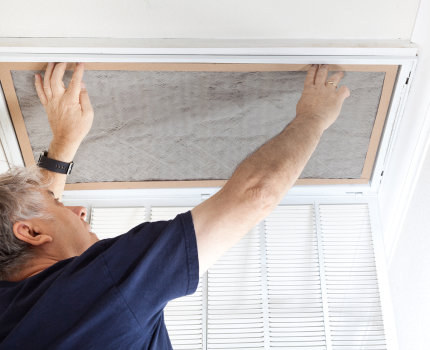
Your HVAC system can help you improve your indoor air quality by capturing common sources of indoor air pollution like pollen, pet dander, mold spores, and even some virus droplets and bacteria. It all depends on the quality of the air filtration system you use.
Make sure you change the filter every 30-90 days. Changing the air filter regularly is an important part of HVAC maintenance that not only keeps your air cleaner but also protects your HVAC system. Learn more in our Guide to HVAC Filter Replacement.
Consider upgrading to a whole-home air cleaner for even better air filtration.
9. Keep humidity under control
High humidity can create an environment where mold and mildew can thrive, causing damage to your HVAC system, drywall, carpeting, and more. Low humidity can exacerbate a sore throat or cough and cause dry skin. If you live in a high-humidity area, consider a whole-house dehumidifier and UV lights for your HVAC system. If you suffer from low humidity, consider a whole-house humidifier.
Keeping your indoor humidity in the sweet spot helps improve overall indoor air quality and can help you sleep better at night. Learn more about how to achieve the ideal indoor humidity.
10. Monitor your indoor air quality
Finally, monitor your home’s indoor air quality. We would recommend the Awair® Element. The Element is a smart, all-in-one indoor air quality monitor that you can use to monitor the temperature, humidity, CO2, chemicals, and PM2.5 levels (any fine dust or particulate matter that is 2.5 microns in width or smaller).
It integrates seamlessly with the American Standard Home App. You can see your Awair Score in the app and opt into the pre-programmed automation from American Standard Home. This automation uses the Awair Score to determine when the HVAC fan should run.
Work with HVAC professionals who know about IAQ
Your local American Standard dealer knows about more than just home heating and cooling systems. They know we have a full suite of indoor air quality products, from humidifiers and dehumidifiers to ventilators to whole-home air purifiers that can help improve the air you breathe.
Expert review by Sean Goddard, Product Manager, Coils & Indoor Air Quality