Published: June 05, 2025
Ductwork: The Hidden Component of Your HVAC System
Discover the hidden role of ductwork in your HVAC system. Learn how it works, signs of trouble, and maintenance tips to keep your home comfortable.

Summary
Curious about the unseen hero of your home’s comfort? Discover how ductwork plays a vital role in your HVAC system’s efficiency and performance.
Often tucked behind walls, under floors, or up in the attic, your home’s ductwork tends to stay out of sight and out of mind. But even without much fanfare, it plays a starring role in keeping your home comfortable throughout the year. In this guide, we’ll break down what your HVAC ductwork does, how to spot signs of trouble, and proper maintenance tips to keep things running smoothly year-round.
What is ductwork and how does it work?
Ductwork is essentially the system of metal or flexible tubes that moves conditioned air throughout a building or home, kind of like the lungs of your home or office.
Whether it’s heating in the winter or air conditioning in the summer, ductwork works together with your heating and cooling system to ensure all the rooms in your home reach the desired temperature. Without properly designed and sealed ductwork, even the best HVAC system can struggle to keep your home comfortable and energy efficient.
There are several types of air conditioning ductwork, but sheet metal – often made of aluminum or galvanized steel – is the most common due to its durability and resistance to mold. Flexible ductwork is easier to install in tight spaces and is well insulated, while fiberboard and fiberglass-lined options also offer added insulation but require regular maintenance.
Ductwork is found in most HVAC setups, including split systems (where the heating and cooling systems are separate) and packaged systems that house all the equipment in a single unit.
What are the key components of a duct system?
Let’s explore the main components of an HVAC duct system:
- Air Handler/Furnace. This is the heart of the system. It pushes the air through the ducts. It either heats or cools the air before sending it on its journey.
- Supply Ducts. They carry the heated or cooled air from the air handler to different rooms in your home.
- Vents/Registers (Supply Vents). They release the conditioned air into your living space. You can often adjust them to control how much air comes through. Supply vents are found in every room in a home, including bedrooms, kitchens, and living rooms.
- Return air vents. Usually larger and often placed on walls or ceilings, return vents allow air to flow back into the system. Homes typically have one or more return vents.
- Return Ducts. They transport air from the return vents back to the air handler to be cooled or heated again, creating a full loop.
- Plenum (Supply and Return). Think of these as central hubs or lungs. The supply plenum distributes air to the supply ducts, while the return plenum gathers air from the return ducts.
- Dampers. Some HVAC systems have dampers installed inside the ductwork to regulate or block airflow to certain areas. Dampers are used to create temperature zones across your home for improved comfort and efficiency.
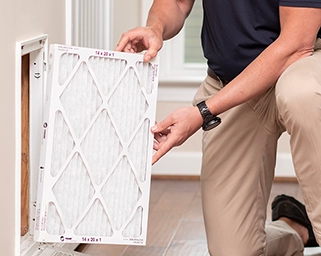
- Filters. Positioned near the return duct, air filters trap dust, pollen, and other pollutants to protect your HVAC system and improve air quality.
- Insulation. Wraps around ducts (especially in unconditioned spaces like attics or basements) to prevent heat loss or heat gain depending on the season.
How to spot leaky air ducts
Like the rest of your HVAC system, ducts can develop issues that can significantly hinder their performance and efficiency. It’s estimated that the average home loses 20-30% of conditioned air due to leaks, holes, poorly installed ducts, and disconnected HVAC ductwork, according to ENERGY STAR®. This causes your HVAC system to run longer cycles to meet your temperature needs, which can increase wear and drive up energy costs.
Common signs to watch for that indicate your ducts may be leaking include:
Some rooms are always too hot or too cold
If you notice certain rooms in your home are constantly warmer in the summer or colder in the winter, leaky ducts could be to blame. When air escapes before it reaches its destination, those rooms get uneven airflow and suffer comfort issues. Rooms the farthest away from your central HVAC system are more prone to developing hot or cold spots.
Your energy bills are climbing
Duct leaks can cause high energy bills during the summer or winter. Leaky ducts force your HVAC system to work overtime to make up for the lost air, which means more energy use and higher costs each month.
There’s dust – everywhere
If you’re constantly dusting and it feels like the dust comes right back, your air conditioning ductwork might be pulling in dirty air from unsealed spaces like attics or crawl spaces. This not only increases allergens but also makes your system less efficient.
Weak or inconsistent airflow
When you put your hand over a vent and barely feel air coming out, or notice some vents blowing much stronger than others, that’s a common sign of duct leaks. Air is escaping somewhere along the line, so not all vents are getting their fair share.
How to fix leaky ductwork
Depending on the condition of your HVAC ductwork, a dealer might recommend sealing, repairing, or replacing them.
Sealing ductwork
Sealing your ducts is an effective and budget-friendly way to improve your HVAC system’s efficiency and your home’s comfort. Over time, small gaps, cracks, or loose connections can form in the ductwork, allowing conditioned air to escape into walls, attics, or crawlspaces. A professional can locate these leaks and seal them using specialized materials like mastic sealant or metal tape. Proper sealing can boost airflow, reduce energy waste, and even help with air quality by keeping out dust and pollutants. It’s a relatively quick fix that can make a noticeable difference.
Repairing ductwork
Duct sealing may not be enough if you notice sections that are sagging, crushed, or disconnected. An HVAC technician can reconnect loose duct runs, replace damaged pieces, and add insulation where needed to prevent temperature loss. These types of repairs are often cost-effective and can extend the life of your duct system. If your air conditioning ductwork is in good shape overall, repairs can restore proper function without a full replacement.
Replacing ductwork
If your duct system is outdated, poorly designed, or too damaged to repair effectively, a full replacement might be the best option. This is especially true for older homes where ductwork may not meet current standards or wasn’t designed with energy efficiency in mind. While it’s a bigger investment, it often pays off through increased comfort, lower energy bills, and a more reliable HVAC system.
Should you clean your air ducts?
While regular HVAC maintenance is a must each spring and fall, air duct cleaning is a different story. It's not something every home needs routinely, but in certain situations, it can make a real difference.
Duct cleaning isn’t a scam, but there are shady companies out there offering cheap, low-quality services that can do more harm than good. If you’re considering it, make sure to hire a certified professional through the National Air Duct Cleaners Association (NADCA).
The U.S. Environmental Protection Agency says duct cleaning is only essential in specific cases: visible mold growth inside ducts, insect or rodent infestations, or excessive dust buildup that’s affecting airflow. If your home is older or you’re noticing signs like reduced airflow or dust blowing from vents, it might be worth getting an inspection.
Proper duct cleaning covers your entire HVAC system and should be done with professional equipment. While it might help with indoor air quality in certain situations, other solutions like better air filters or whole-home air purifiers might give you more bang for your buck if dust and allergens are your main concern.
Contact an American Standard dealer for duct repair or replacement
If you notice any signs of duct issues, contact an American Standard® dealer. They have the proper training and specialized tools to identify air duct leaks and perform the necessary repairs or replacement. With over 100 years of experience, you can trust American Standard for high-quality, dependable heating and cooling solutions.
Expert review by Kimberly Sexton, Senior Systems Engineer