Just like the pipes in your home, sometimes the ductwork used to distribute warm or cool air into your home needs to be cleaned to prevent blockage buildup. Below you’ll find air handler troubleshooting tips, including how to identify problems with return air inlet size, location, and ductwork.
While it’s true that adding additional lets and ductwork can solve some of your airflow issues, it can be a time consuming and expensive job that will require a professional to come to your home. However, there are plenty of HVAC air handler troubleshooting tips to increase the performance of your air handler without invasive ductwork additions.
Perform air handler troubleshooting by checking these components:
- Previous “fixes.” Try to determine if there are holes or barriers preventing adequate air to move freely within the ductwork. If some rooms seem to heat or cool more readily than others, it may be a sign that previous work had been done on the ducts and air is escaping elsewhere. Holes or seams should be sealed with duct tape, and barriers in the ductwork should be removed.
- Blower assembly. If, when you take the cover off the blower assembly, you notice a significant difference in the amount of air that is coming out of the duct, it may be a sign that the return is air starved. Make sure that there are no obstructions that are preventing air from entering the return.
- Fan Speed. Sometimes HVAC system blower fans cannot move enough air per minute within the space that needs to be heated or cooled. Adjust the fan speed, and if you’re still experiencing problems, contact your local American Standard Customer Care dealer.
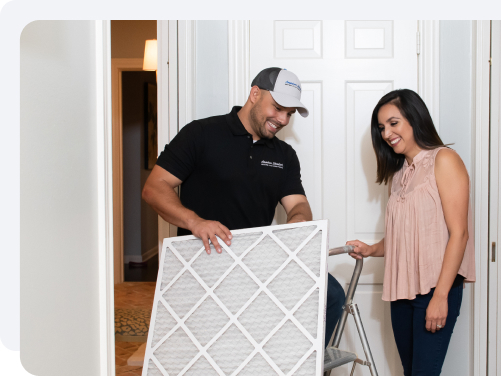
- Air Filter. Be sure to check the air filter and replace if necessary. A dirty air filter can cause your HVAC system to go into overdrive and result in costly energy bills.